 Email:
inquiry@heliosz.ai
Email:
inquiry@heliosz.ai Phone: +1 (332) 255-6223




 5 Min Read
Key concepts at a glance
-
 What it measures: Channel-level contribution to sales, revenue, or conversions.
 -
The core method: Multivariate regression using time-series marketing and sales data.
-
The primary output: ROI per channel and budget optimization recommendations.
-
Who uses it: CMOs, media planners, data analysts, and growth teams.
What Is Marketing Mix Modeling, And Why Does It Matter Right Now?
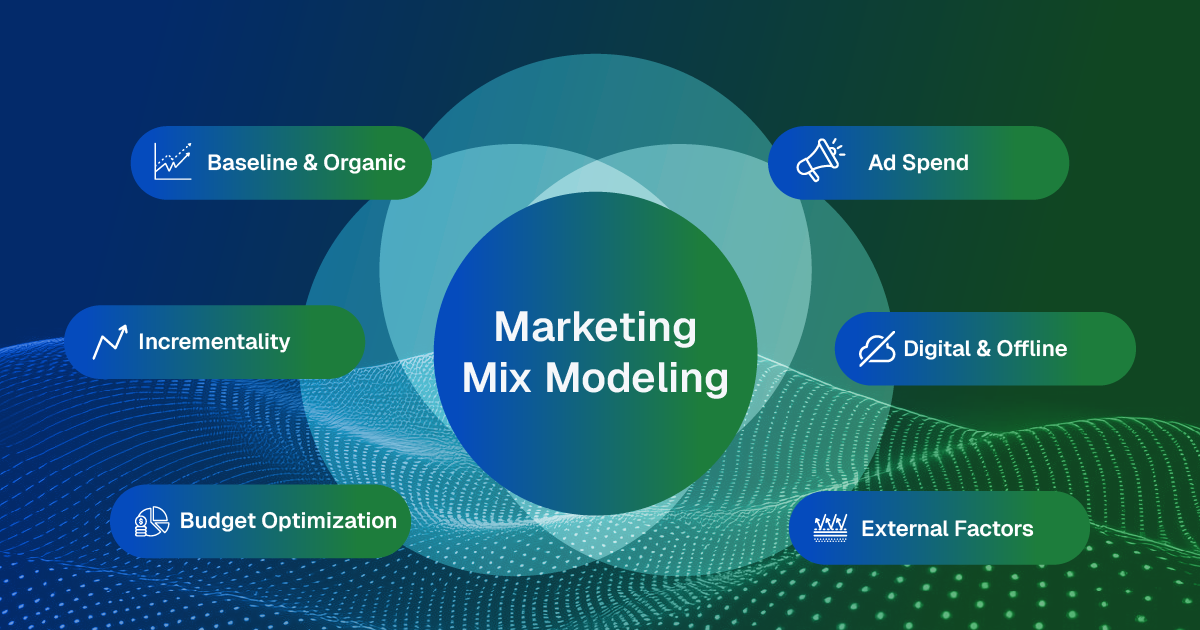
Marketing Mix Modeling (MMM) is a statistical method used to measure how each marketing channel, TV, paid social, search, outdoor, email, and promotions, contributes to sales. MMM relies on historical data to separate what your marketing actually influenced from what would have happened anyway. That difference directly impacts how you allocate budget.
Here’s the challenge most teams deal with. You run multiple channels at the same time. Sales increase. You either credit the last click or spread the impact across all channels. Neither reflects reality, and both lead to poor budget decisions in the next cycle.
This problem has been around for years. What changed is the environment. Attribution models based on cookies and user tracking are becoming less reliable. Platforms like Meta and Google report in silos. And there’s still no single view that connects digital, offline, and in-store performance.
This is where MMM becomes relevant again.
So, what is Marketing Mix Modeling (also called Media Mix Modeling), and how does it actually work? Let’s explore!
Why Marketing Mix Modeling Matters for Advertisers
It’s a Tuesday morning. The weekly report is in your inbox. Paid search looks strong. Paid social looks decent. TV has gaps. Promotions are only partly tracked. Organic barely shows up.
You’re trying to make sense of all this.
Every channel is telling its own version of the story. Each one claims credit. None of them connect. And you’re left with the same question. Where should the budget actually go?
That’s where things start to break.
-
Each channel measures success differently
-
Data sits in separate dashboards
-
There’s no clear view across online and offline
So decisions get made on partial information.
This problem has always been there. It just feels sharper now.
Tracking isn’t as complete as it used to be. Cookies are fading. Privacy rules are tighter. What worked a few years ago now leaves gaps in the data.
At the same time, you’re running more channels than before. Search, social, display, TV, influencers, retail. They influence each other, but you don’t see that clearly in reporting.
And then there’s reporting.
Meta shows its numbers. Google shows its own. TikTok does the same. When you try to combine them, the math doesn’t add up. Different platforms end up taking credit for the same outcome.

That’s the gap.
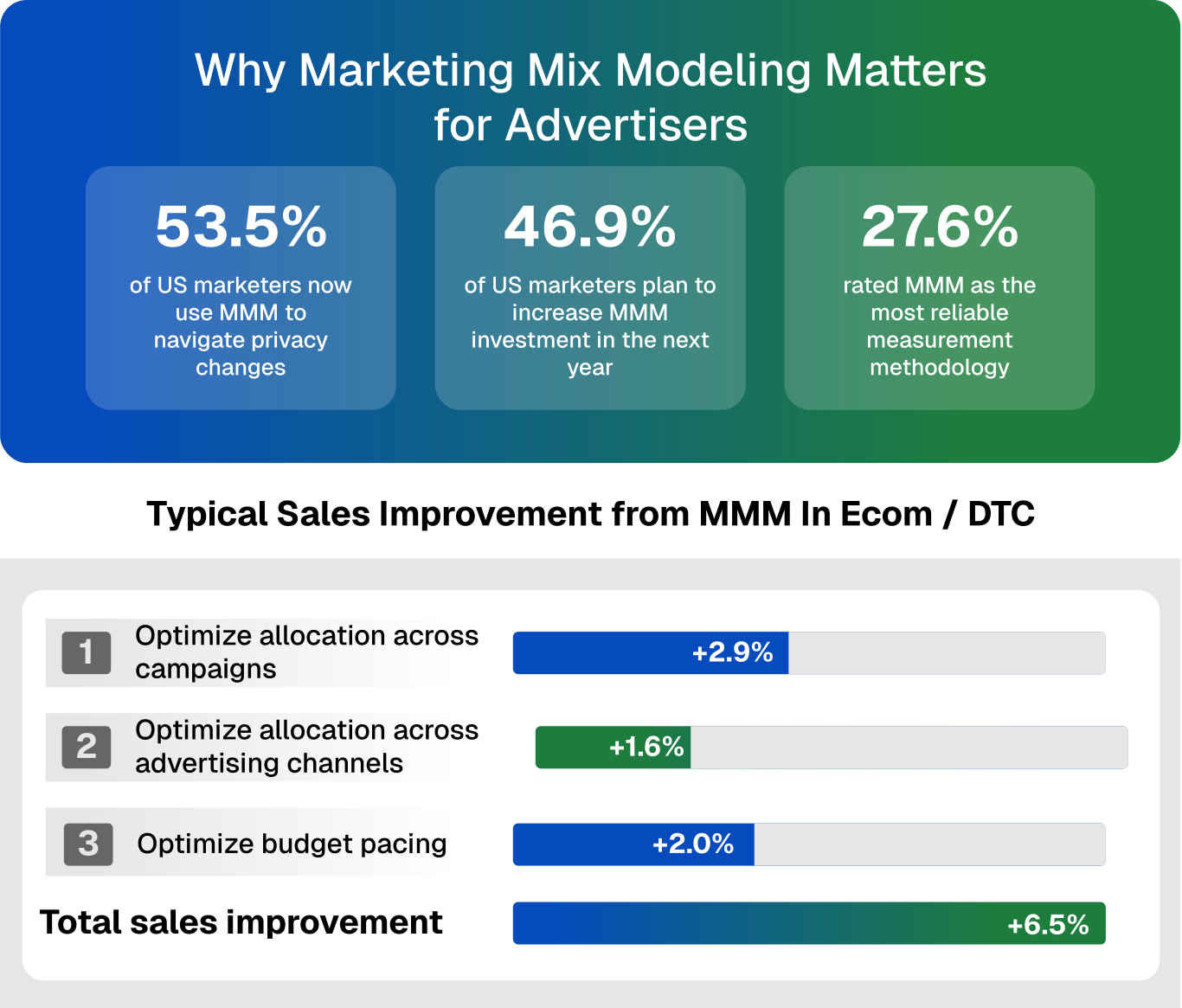
Marketing Mix Modeling (MMM) takes a different route. Instead of tracking individual users, it looks at total sales and total spend. Then it estimates how each channel contributes to results.
What you get is clearer direction:
-
You see which channels are driving incremental impact
-
You spot where returns start flattening
-
You can plan budgets with more confidence
And when someone asks where the budget should go, you’re not guessing anymore.
How does Marketing Mix Modeling actually work?
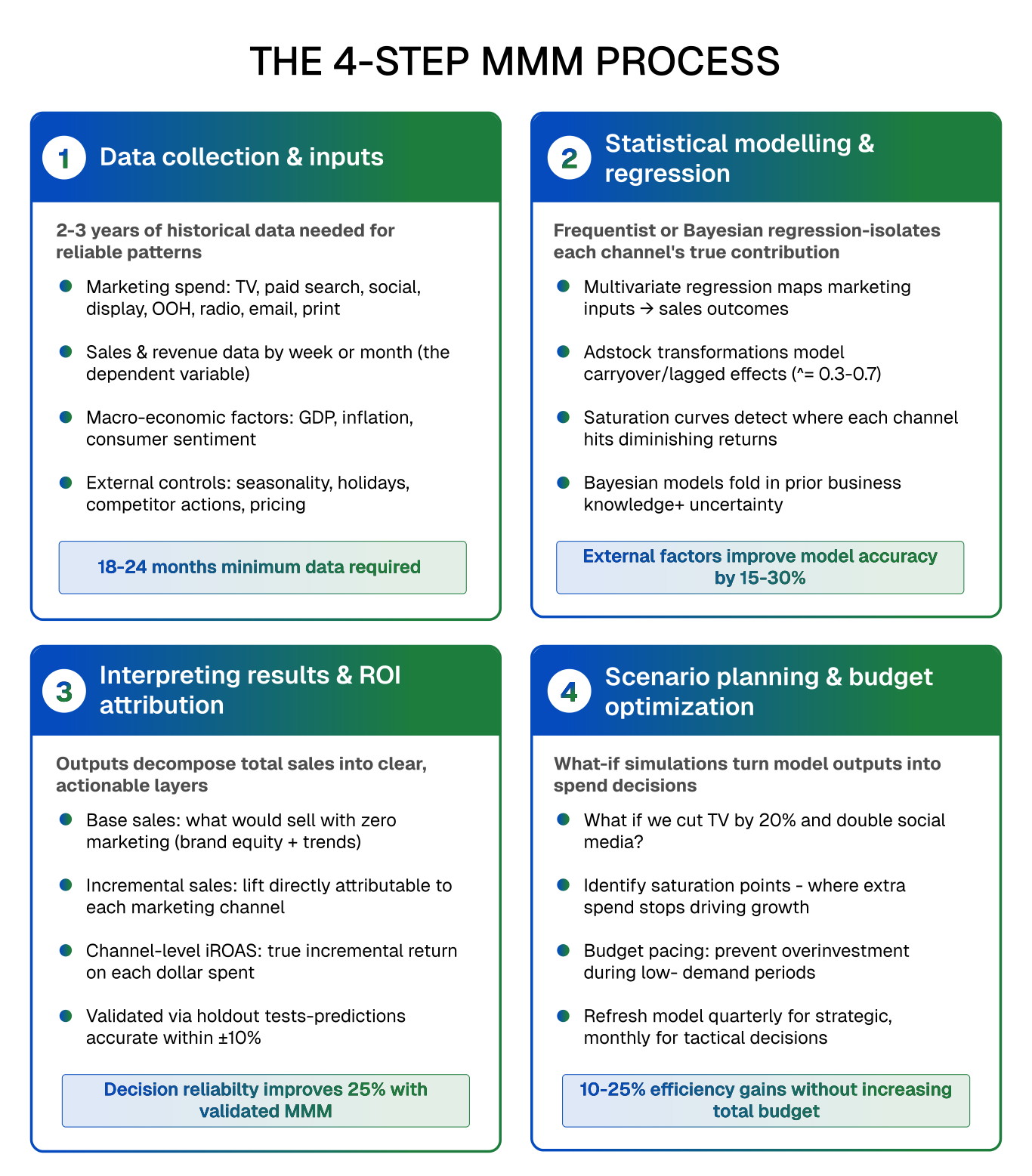
At its core, Marketing Mix Modeling (MMM) uses regression analysis to understand how different factors affect your sales.
The math behind it can get complex. The idea is simple.
Your sales move up and down over time. Some of that comes from marketing. Some comes from seasonality, pricing changes, competitor actions, or broader market conditions. MMM looks at all of these together and estimates how much each one contributed.
It doesn’t isolate one channel at a time. It looks at the full picture.
Data collection and inputs
Everything starts with data. To build a model that works, you typically need 2–3 years of historical data, though this can vary depending on your data variability.
-
Media spend across channels
-
Pricing and promotional history
-
Distribution or product changes
-
External factors like weather or market trends
The model is only as good as the data you feed into it. Missing or inconsistent data will affect the output.
Today, most MMM platforms connect directly with tools like Google Ads, Meta, and TikTok. What used to take weeks can now be pulled together much faster.
Statistical modeling and regression
Once the data is ready, the model analyzes how your inputs impact sales. Instead of chasing clicks or individual users, it looks at your business data as a whole.
-
Frequentist regression: The traditional approach that relies strictly on the data you provide to find patterns.
-
Bayesian regression: An approach that is becoming increasingly common because it combines your historical data with "prior" knowledge.
There are two main ways models handle this math:
While both methods are valid, Bayesian regression is often used because it handles uncertainty better. It allows the model to give more stable estimates even when some information is missing or the data is limited.
Understanding the results
The output separates two things:
-
Base demand (sales that would happen anyway)
-
Incremental impact (sales driven by marketing)
From there, you can see how each channel contributes.
Sometimes the results challenge assumptions. A channel that looks strong in platform reports may show low incremental impact. Another channel may be doing more than expected.
This is where MMM becomes useful. It shows what is actually driving growth, not just what is getting credit.
Scenario planning and budget decisions
Once the model is in place, you can test decisions before making them.
You can ask questions like:
-
What happens if we shift budget between channels?
-
Where can we scale without losing efficiency?
-
Which channels are already saturated?
MMM uses response curves to answer this. These curves show how returns change as spend increases.
-
A steep curve → more room to grow
-
A flat curve → diminishing returns
At this stage, MMM moves from analysis to action.
What actually happens behind an MMM recommendation
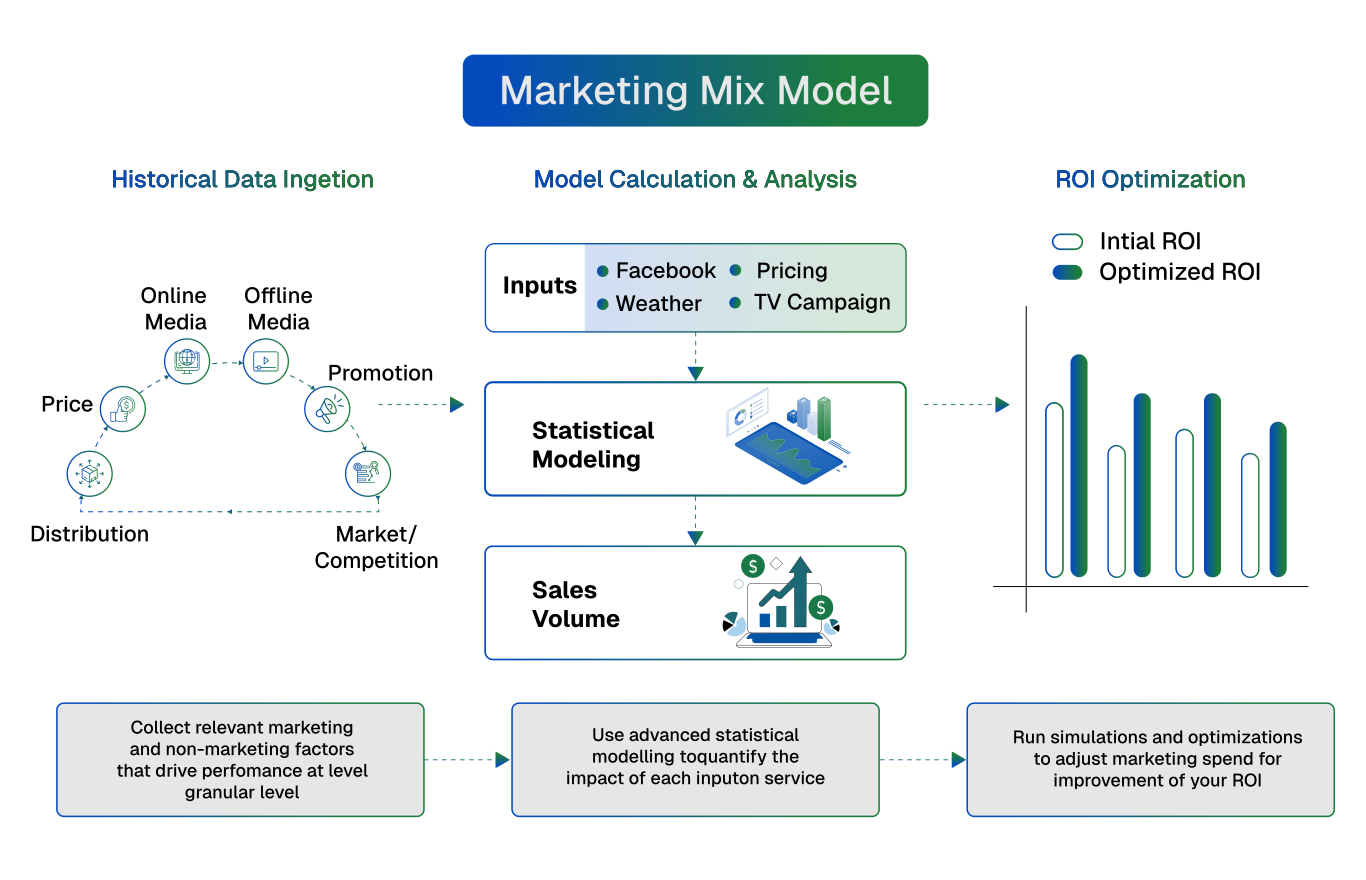
On paper, MMM looks like a clean, step-by-step process. In reality, each step needs careful handling. Small gaps early on can affect everything that follows.
Here’s how a typical MMM workflow comes together, and what’s happening at each stage.
Stage 1: Data onboarding
You start by connecting your data sources. This includes sales data, media spend, promotions, and external factors. Most modern platforms pull this through integrations, so setup is faster than it used to be.
Stage 2: Data harmonization
Raw data comes in different formats. Dates don’t match. Campaign structures vary. Some data is weekly, some daily.
This stage standardizes everything into a consistent format so the model works with one clean dataset, not disconnected pieces.
Stage 3: Variable selection and preparation
Not every input belongs in the model.
You filter for variables that have enough variation and reliable data. At this stage, transformations like adstock are applied to media channels to account for carryover effects. For example, a TV campaign can continue to influence sales even after it ends.
Stage 4: Model building and calibration
The regression model is built using all selected variables.
Most systems use Bayesian methods to improve stability and handle uncertainty. Calibration is then applied using external evidence like incrementality tests or geo experiments. This helps keep results grounded in observed behavior, not just statistical patterns.
Stage 5: Validation
A model that fits past data perfectly is not enough. It needs to prove it can predict the future.
To do this, we use holdout tests. This means we hide a portion of your historical data from the model and ask it to "predict" what happened. We then compare those predictions to the actual results.
The goal is to ensure the model is grounded in reality. While accuracy levels vary based on your data quality and model design, this step is what gives you the confidence to trust the results for your next budget cycle. If a model cannot pass this test, it should not be used for decision-making.
Stage 6: Outputs and scenario planning
The results are presented through dashboards and planning tools.
You get visibility into channel contribution, ROI, and diminishing returns. More importantly, you can test different budget scenarios before making changes.
Stage 7: Ongoing updates
The model isn’t a one-time exercise.
As new data comes in, the model needs to be refreshed. Market conditions change, and so does channel performance. Regular updates keep the outputs relevant.
This process is what turns MMM from a one-off analysis into a system you can rely on for ongoing decisions.
What you actually learn from an MMM model
After running a Marketing Mix Model, you don’t just get charts. You get answers you can act on.
There are four core outputs that matter.
1. Channel contribution
You see how your total sales break down.
This includes base demand, paid channels, campaigns, promotions, seasonality, pricing, and external factors. In one view, you understand how much revenue came from your marketing versus what would have happened anyway.
This is where teams often get a surprise. Base demand tends to be higher than expected, which means some campaigns are taking credit for sales they didn’t actually drive.
2. ROI by channel
You get a clear return for each channel you invest in.
For every dollar spent on channels like search, social, TV, or others, you see how much incremental revenue it generated. These numbers are shown in a consistent format, often with ranges, so you understand both the return and the level of confidence.
3. Response curves and saturation
Each channel comes with a curve that shows how returns change as spend increases.
-
A flat curve means the channel is close to saturation
-
A steep curve means there is still room to scale
This helps you understand where additional spend will actually work and where it won’t.
4. Scenario planning
You can test decisions before making them.
You can simulate changes like increasing TV spend, reducing retargeting, or shifting budget between channels. The model shows the expected impact on revenue before you commit real budget.
What you can do with these insights
-
Move budget away from saturated channels
-
Invest more in channels with growth headroom
-
Build a stronger case for increasing overall marketing spend
-
Identify which promotions drive real sales versus just discounts
-
Set KPIs based on actual contribution, not platform-reported metrics
This is where MMM becomes practical. It turns scattered data into decisions you can defend.
What goes into a Marketing Mix Model
An MMM is only as reliable as the variables it accounts for. If key drivers are missing, the model will assign credit incorrectly and lead to flawed decisions.
A well-structured model captures the full set of factors that move your revenue.
Base demand
This represents the level of revenue your business generates without any marketing input.
It is not a fixed number. It reflects brand equity, distribution strength, and underlying demand in the market. Getting this right is critical. If base demand is overstated, marketing impact will be undervalued. If understated, media performance will be overstated.
Incremental contribution from paid media
Each paid channel is measured for its incremental effect on revenue.
This includes search, social, display, TV, retail media, and offline channels. The model estimates how much additional revenue each channel generated beyond baseline demand, using a consistent framework across all investments.
Pricing effects
Pricing has a direct and often outsized influence on demand.
Discounts, price increases, and product-level pricing changes can shift sales significantly. If pricing is not modeled explicitly, these movements are incorrectly attributed to marketing activity, which distorts ROI.
Promotions and commercial activity
Promotions create short-term demand spikes, but not all of it is incremental.
The model separates true lift from demand that would have occurred without the promotion. This distinction is important for understanding whether promotions are driving growth or simply shifting timing and reducing margin.
Seasonality
Demand patterns follow predictable cycles.
Holiday periods, category-specific peaks, and recurring events all influence sales. Removing these patterns allows the model to isolate the actual contribution of marketing activity rather than seasonal effects.
Macroeconomic and external factors
Your revenue is influenced by things you cannot control. Factors like the economy, fuel prices, and general market trends all play a huge role in whether people buy from you.
Including these external factors is what makes a model accurate. When you account for the "outside world," you prevent the model from incorrectly giving your marketing credit for a sales spike that was actually caused by a market shift or a competitor’s mistake. Without this context, your ROI numbers will be inflated and unreliable.
Competitive activity
Your performance is shaped by competitor behavior.
Changes in competitor pricing, product launches, or media investment can affect your outcomes. Advanced models incorporate competitive signals or proxy variables to account for this impact.
Carryover effects (adstock)
Marketing impact extends beyond the campaign window.
Channels such as TV, video, and brand campaigns influence demand over time. Adstock transformations capture this delayed effect, ensuring that upper-funnel activity is not undervalued.
A complete MMM does not rely on one signal. It brings these variables together to explain how revenue actually moves.
When any of these inputs are missing or poorly defined, the model may still produce outputs, but the decisions built on them will be unreliable.
Where Marketing Mix Modeling gets difficult
MMM is useful, but it is not easy. The hard part is the combination of data quality, model design, organizational trust, and speed. Modern platforms have improved the workflow, but the same pressure points still decide whether the output becomes a decision tool or just another analytics project.
Long timelines reduce business value
Traditional MMM often took months to deliver. Data had to be collected from multiple systems, standardized manually, modeled, validated, and then packaged into a final presentation. That delay created a practical problem. By the time the model was ready, the budget mix, campaign plan, or market conditions had already changed.
That is why speed matters. Modern platforms reduce setup time through direct connectors and reusable modeling workflows, which makes faster refresh cycles possible. The value of MMM rises when it moves closer to planning cadence, not when it arrives as a one-time retrospective.
Poor visibility weakens trust
A model that cannot be explained will not influence budget decisions. This is especially true when MMM results conflict with platform dashboards or long-held internal beliefs.
Executives and analysts need to see what went into the model, how variables were transformed, how uncertainty was handled, and how the outputs were validated. Modern Bayesian MMM frameworks are built to return estimates with uncertainty ranges, not a false sense of precision. That matters when the result is being used to move real budget across channels.
Data fragmentation still slows everything down
MMM depends on bringing together sales, spend, promotions, pricing, and external variables in one usable structure. In practice, that data usually sits across ecommerce systems, CRM tools, ad platforms, finance files, and spreadsheets. The challenge is not just collection. It is consistency.
If date ranges do not match, geographic levels differ, or campaign naming is inconsistent, the model becomes weaker before it even starts. Automation helps, but it does not remove the need for disciplined data preparation.
Cross-channel effects are easy to miss
Channels do not work in isolation. TV can lift branded search. Creator campaigns can raise direct traffic. Paid social can increase conversion rates in channels that capture demand later.
A simplistic model can miss these relationships and assign too much credit to the last channel in the chain. More advanced MMM approaches account for lagged effects, diminishing returns, and in some cases richer media inputs such as reach and frequency, which can improve how media contribution is estimated.
Models lose value when they are not refreshed
An MMM built on old behavior becomes less useful with every quarter. Media costs change. Creative quality changes. Channel mix changes. Consumer demand changes too.
This is why MMM cannot be treated as a one-off project. It needs regular refresh cycles so the model reflects the business as it operates now, not as it looked during the last measurement window.
Limited data makes estimation harder
MMM has traditionally worked best with longer time series and stable historical data. Smaller advertisers, new brands, or teams with short campaign histories often struggle here.
That is where Bayesian methods help. They are better suited to handling uncertainty and can estimate parameters such as adstock and saturation while producing credible intervals around the output. They do not remove the limits of weak data, but they do make MMM more usable than older methods for a broader set of businesses.
Internal buy-in is often the real bottleneck
Even a technically sound model can fail inside the business. Channel owners trust the dashboards they use every day. Finance wants defensible numbers. Leadership wants a clear recommendation, not a statistics lesson.
That is why adoption depends on more than model quality. Teams need transparency, validation, and scenario planning they can interrogate. When people understand how the recommendation was produced, resistance tends to drop and the discussion shifts from opinion to trade-offs.

The MMM Actionability Gap
Marketing Mix Modeling (MMM), also known as Media Mix Modeling, is widely recognized as essential for data‑driven decision making. Yet, many organizations struggle to translate insights into action.
-
87% of marketing leaders say MMM is important for gaining data‑driven insights.
-
Only 28% report being very effective at turning those insights into timely, impactful actions.
This gap highlights a critical challenge: while MMM provides the intelligence, organizations often lack the processes, agility, or alignment to act on it effectively. Bridging this gap is where competitive advantage lies.
Reference: Harvard Business Review Analytic Services, Bridging the Marketing Mix Modeling Actionability Gap, 2025 (survey of 547 global marketing leaders, Sept. 23-Oct. 6, 2025).
Beyond MMM: where measurement is heading
| Capability | Heliosz (MEM Platform) | Traditional MMM Tools | Attribution / MTA Tools |
|---|---|---|---|
| Holistic Commercial Understanding | |||
| Full business view (media, pricing, promotions, external factors) |  |
 (limited to media + some factors) (limited to media + some factors) |
 |
| Cross-functional planning (marketing + commercial inputs) | |
|
|
| Scenario planning across full business drivers | |
(limited, slower) |
|
| Competitive and external impact included | |
|
|
| Long-term and short-term impact visibility | |
(mostly long-term) |
|
| Marketing Understanding | |||
| True channel contribution (incrementality) | |
|
(credit-based, not true impact) |
| Cross-channel interactions and synergies | |
(model dependent) |
|
| Cannibalization and overlap visibility | |
|
|
| Unified view across online and offline | |
|
|
| Performance Monitoring | |||
| Continuous model updates (always-on) | |
(periodic refresh) |
(real-time, but limited scope) |
| Budget optimization and scenario simulation | |
(not continuous) |
|
| Real-time or near real-time decision support | |
|
(only for digital) |
| Incremental ROI and saturation insights | |
|
|
What data does a Marketing Mix Model actually use
MMM is only as good as the data behind it. The model learns from patterns in your historical data.
That data typically falls into three groups.
1. Time-series data (the core input)
This is the foundation of the model. It usually covers 18 to 24 months of weekly data so the model can detect patterns over time.
At a minimum, this includes:
-
Sales data
Revenue, units, or conversions. Ideally broken down by product, region, or channel.
-
Media spend
Digital channels like Google, Meta, TikTok, along with impressions and clicks. Offline channels like TV, radio, print, outdoor, and direct mail.
-
Owned media activity
Email campaigns, SMS sends, organic social activity.
-
Pricing and promotions
Product-level pricing changes, discount events, bundling, and seasonal offers.
-
Distribution changes
Store openings, retail listings, or shifts in availability.
-
External factors
Economic indicators, fuel prices, weather patterns where relevant, and major market events.
This dataset allows the model to understand how revenue moves over time and what influences those movements.
2. Attribution and platform data (for comparison and calibration)
This data is not the primary driver of the model, but it helps validate and refine the outputs.
-
Google Analytics or similar tools for attribution signals
-
Platform-reported conversions and ROAS from ad channels
-
Multi-touch attribution data where available
These sources provide directional benchmarks. They help check whether the model’s estimates are aligned or need adjustment.
3. Experiment data (for validation and confidence)
This is where the model gets grounded in real-world evidence.
-
Conversion lift tests from platforms like Meta or Google
-
Geo-based experiments comparing exposed and control regions
-
A/B tests on pricing, creatives, or promotions
This data is used to calibrate the model, reducing reliance on pure statistical inference.

What you don’t need
MMM does not depend on user-level tracking. You do not need third-party cookies or individual user data to get a clear picture of your performance. The model works entirely on aggregated business data, which makes it safe to use in a privacy-first world.
However, while user-level data isn't a requirement, the model still benefits from other inputs. Using aggregated attribution data and results from real-world experiments helps ground the model and makes the outputs even more accurate. It is about using the right signals, not tracking every individual click.
Marketing mix modeling vs. Multi-touch attribution vs. Marketing effectiveness measurement
| Dimension | Marketing Mix Modeling (MMM) | Multi-Touch Attribution (MTA) | Marketing Effectiveness Measurement (MEM) |
|---|---|---|---|
| What it measures | Incremental contribution of channels to total revenue across online and offline media | Distribution of credit across user-level digital touchpoints in a conversion path | Overall business impact, combining media, pricing, promotions, and external factors |
| Data required | Aggregated time-series data (sales, spend, external variables) | User-level tracking data (cookies, device IDs, event streams) | Aggregated data with continuous inputs across media, commercial, and external signals |
| Privacy reliance | Low. Does not depend on individual user tracking | High. Relies on user-level identifiers and tracking | Low. Built on aggregated, privacy-safe data structures |
| Offline coverage | Yes. Includes TV, radio, outdoor, print | No. Limited to digital environments | Yes. Covers full online and offline mix |
| Speed of output | 1-3 weeks for modern platforms with prepared data; longer for complex enterprise setups | Near real-time for tracked digital interactions | Continuous updates with regular model refresh cycles |
| Use for budget planning | Strong. Supports strategic allocation and scenario modeling | Limited. Designed for channel-level optimization, not allocation | Strong. Enables ongoing budget decisions with forward-looking estimates |
| Cross-channel interactions | Captured through regression and lag effects, though dependent on model design | Limited. Typically rule-based or probabilistic within digital channels only | Captured through continuous modeling and interaction effects |
| Best suited for | Strategic planning, channel ROI, long-term budget allocation | Campaign optimization, bidding, and digital performance tracking | Continuous marketing effectiveness and commercial decision-making |
| Key limitation | Requires sufficient historical data and careful model design | Accuracy declining due to loss of tracking signals and cookie deprecation | Requires strong data infrastructure and operational maturity |
Before you close the tab
At some point, the conversation shifts.
The question is not how campaigns performed. It is what the spend actually delivered to the business.
That is where most teams hesitate. The data exists, but it does not come together in a way that holds up when decisions get serious.
So budgets get set with partial visibility. Channels get protected based on past performance. And planning becomes harder than it should be.
Marketing Mix Modeling changes the way that conversation happens.
It does not give perfect answers. But it gives a consistent way to evaluate impact, compare channels, and make decisions without relying on fragmented signals.
Over time, that consistency matters.
It is what allows teams to adjust spend with confidence, respond faster when performance shifts, and explain decisions without relying on assumptions.
If that clarity is missing today, it becomes visible when the stakes are highest.
That is usually where the decision to fix it gets made.