
 5 Min Read

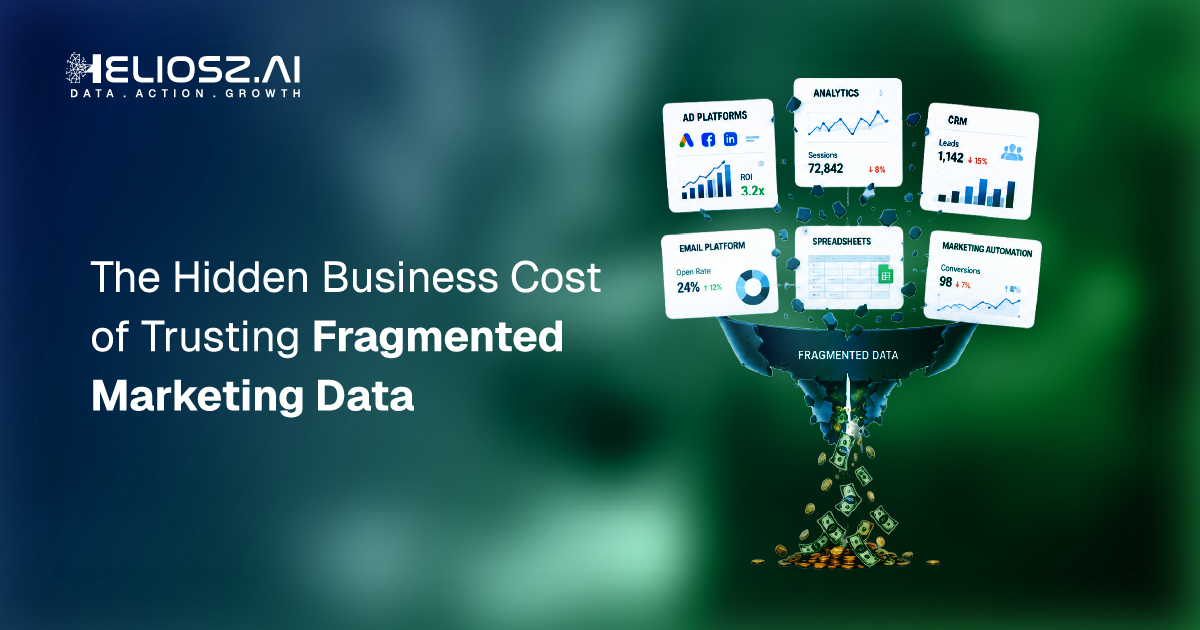
CMOs, marketing leaders, and RevOps teams are drowning in data but starving for clarity. Campaigns generate endless numbers, yet most decisions are still based on guesses rather than facts.
The biggest problem lies in the gap between what ad platforms report and what actually appears in revenue. This disconnect is where marketing budgets quietly disappear.
A Single Source of Truth (SSoT) closes that gap. It creates one unified, trustworthy version of the data that the entire organization can rely on.
Instead of conflicting stories from agencies, platforms, and finance teams, an SSoT brings everyone onto the same page with clear, consistent definitions.
This guide shows what a marketing Single Source of Truth actually looks like in practice and how to build one.

What Changes with an SSoT?
Before you invest in building a Single Source of Truth, it is important to understand exactly how it transforms your marketing operations.
An SSoT shifts the focus from arguing about what happened last week to confidently planning what to do next.
Here is a clear comparison of how key areas change:
| Feature | Before SSoT (The Mess) | After SSoT (The Truth) |
| Data Integrity | Manual exports and spreadsheet manipulation that often lead to human error. | Automated pipelines that move data accurately with no manual intervention. |
| Attribution | Multiple platforms claim full credit for the same sale, creating heavy overlap. | A de-duplicated view that clearly shows which touchpoints actually drove results. |
| Identity | Disconnected clicks and views that appear as different customers. | Identity stitching that connects the full journey of a single customer. |
| Governance | Meetings wasted on arguments over whose numbers are correct. | Meetings focused on strategy because everyone trusts the data. |
| Security | Risky, ad-hoc data handling that exposes the organization to security risks. | Centralized PII controls and consent management built into the system |
Why the Data Problem Is Getting Worse?
Ten years ago, marketing was relatively simple. Teams managed just a few channels, and one report was often enough to understand performance.
That world no longer exists.
Today’s enterprise marketing teams run multiple channels at once: paid search, social media, email, retail media, and sometimes offline campaigns. Each channel comes with its own reporting tool, its own measurement logic, and its own definition of success. Most platforms are designed to present data in ways that encourage continued spending.
Consider a single campaign running across Meta, Google, and a retail media network. Without proper identity resolution, all three platforms may claim full credit for the same sale. This creates massive overlap and wasted budget.
The core issue is fragmented matching logic. To solve it, marketing teams must move beyond platform-reported data and build systems based on first-party data. Using identity stitching, you can connect a Meta ad view, a Google click, and a final purchase back to one unified customer journey.
Instead of counting the same customer three times, you see the complete picture and can accurately determine which touchpoints truly drove the conversion.
Making the situation even more challenging are increasing privacy regulations such as GDPR and CCPA. These are not temporary hurdles. They represent permanent structural changes in how data can be collected and used.
A robust Single Source of Truth must therefore build compliance and security into its foundation. This includes:
- Consent Handling: Only allowing data to flow when users have explicitly opted in.
- PII Controls: Redacting or masking personally identifiable information before it reaches the analysis layer.
- Access Governance: Controlling who can view sensitive data to prevent security risks.
What a Single Source of Truth Actually Means at Enterprise Scale?
Most teams hear the term “Single Source of Truth” and immediately think about buying a new dashboard or a platform that pulls all data into one place.
That mindset is exactly what keeps the problem alive.
A true Single Source of Truth is not just a tool. It is a clear agreement across the organization on three fundamental things: where data comes from, what every number actually means, and who is accountable when numbers do not match.
At enterprise scale, this agreement rests on three core pillars:
1. One Central Data Layer
Every data source in the business including CRM, ad platforms, web analytics, retail media, and offline channels feeds into a single, automated pipeline.
There are no manual exports and no weekly spreadsheet rebuilding. Every report, dashboard, and analysis draws from the same trusted source.
2. One Metric Dictionary
Before connecting any systems, marketing, sales, and finance must agree in writing on the exact definition of every key metric.
This includes clear answers to important questions such as:
- What exactly counts as a lead?
- What counts as a conversion?
- What counts as an attributed sale?
This documented metric dictionary becomes the standard that everyone follows. It removes more confusion than any software tool ever can.
3. One Governance Owner
A named person within the organization (not an agency or IT team) holds final authority when data conflicts arise.
When two reports show different numbers, this owner investigates and provides the definitive answer. This role turns endless debates into a clear, repeatable process.
These three elements only work when they exist together. A clean data layer without agreed definitions still leads to arguments. A well-defined metric dictionary without strong governance falls apart the moment platforms disagree.
Most organizations have tools. Very few have built a real Single Source of Truth.
Where Budget Is Actually Being Lost?
Bad data often arrives disguised as a confident report, a strong ROAS number, and a campaign that appears to be performing well.
The real cost usually shows up later, typically during a board review.
Every Platform Counts in Its Own Favor
When one sale occurs, multiple platforms often claim full credit for it. The problem is that none of them are technically wrong.
Meta may count a user who viewed an ad and purchased within seven days. Google may attribute the same purchase to a search click on the way to checkout. The retail media network counts the final transaction. Each platform uses its own attribution window and its own definition of success.
As a result, the total reported conversions across all platforms are almost always higher than actual sales. Budget decisions based on these inflated numbers are built on fiction.
You Are Paying for the Same Customer Journey Twice
Two different channels often target the same audience and both report successful results. Both receive renewed budgets.
Meta drives awareness at the top of the funnel while Google captures the click at the bottom. Both claim credit for the sale. From the outside, it looks like two channels working in parallel. In reality, it is one customer journey being funded twice with no clear view of which touchpoint actually influenced the decision.
Without a unified view of the customer journey, there is no way to distinguish necessary spend from redundant spend.
The Numbers That Reach Leadership Are Already Old
By the time campaign data is pulled, cleaned, and prepared for leadership, it is often one to two weeks old. Important decisions are made during this delay. Budgets are shifted and channels are reallocated based on outdated information.
By the time more accurate numbers surface, the spending window has already closed.
What a Functioning Single Source of Truth Looks Like in Practice?
The Monday Morning Test
It is Monday morning and the weekly marketing review starts in 10 minutes. One simple question reveals your data maturity: Does everyone walking into that room already agree on the numbers?
If the answer is no, you do not have a Single Source of Truth.
The Reality: What Most Organizations Live With
The meeting begins. Before any discussion about strategy can start, someone asks which report they should use. The agency deck shows one ROAS. The ad platform shows another. The CMO’s numbers do not match the Finance team’s spreadsheet.
Twenty minutes later, the team is still arguing about what actually happened last month. The same pattern repeats in post-campaign reviews. Instead of discussing what worked and what to improve, the conversation gets stuck in endless debates about attribution.
The Standard: What It Looks Like When It Works
The CMO, CFO, commercial lead, and agency all open the same dashboard. They see the same numbers and the same definitions. There are no conflicting versions.
Because attribution rules were agreed upon before the campaign launched, the discussion focuses on what the results mean and what actions to take next, not whether the numbers can be trusted. When a number looks incorrect, one designated owner investigates and resolves it quickly. There are no emergency meetings and no one pulling multiple different reports.
The Audit: How You Know It Is Actually Working
A functioning Single Source of Truth meets these clear standards:
- Every metric has a written definition agreed upon by marketing, sales, and finance.
- No report is built manually. All data pulls automatically from one central data layer.
- The CMO can read any number and trust it without questioning its source.
- Marketing and finance enter board meetings citing the exact same revenue figures.
That last point is much rarer than it should be.
How to know if your SSoT is actually working?
Ask your team these three questions:
- Do we have a shared dictionary? Does everyone agree on what a “Qualified Lead” is?
- Are we stitching data? Are we connecting the dots ourselves, or just letting Google and Meta tell us they did a great job?
- Who is the judge? When two reports disagree, who is the one person authorized to pick the right number?
That trust does not come from better technology. It comes from alignment first, architecture second, and someone accountable for governance always.